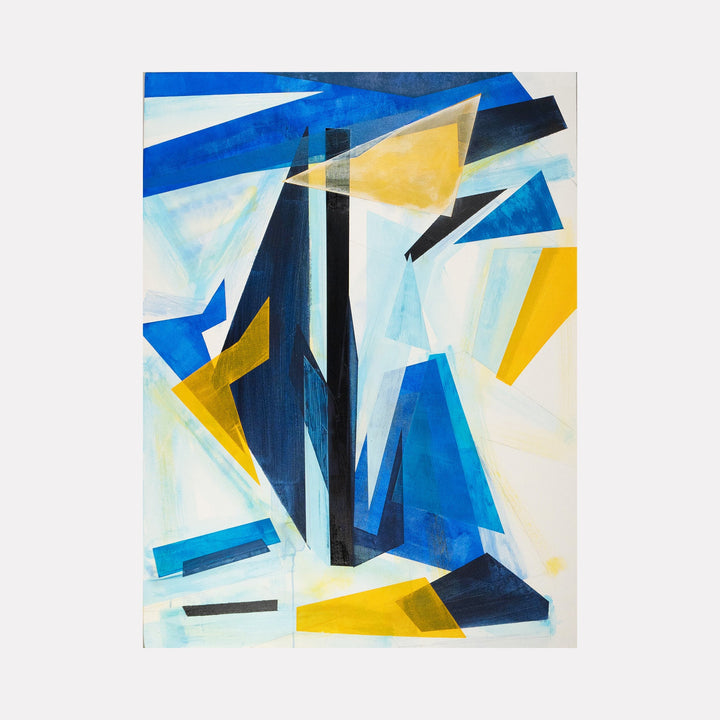
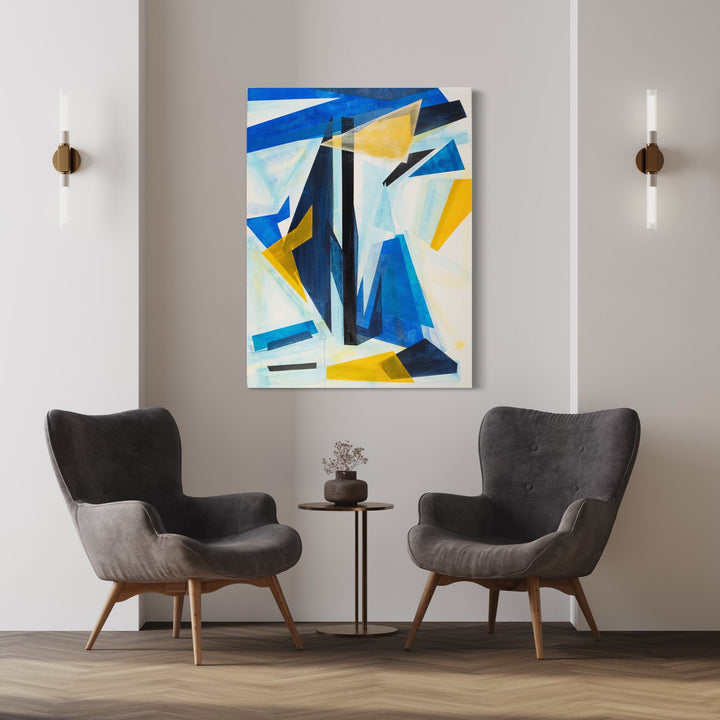
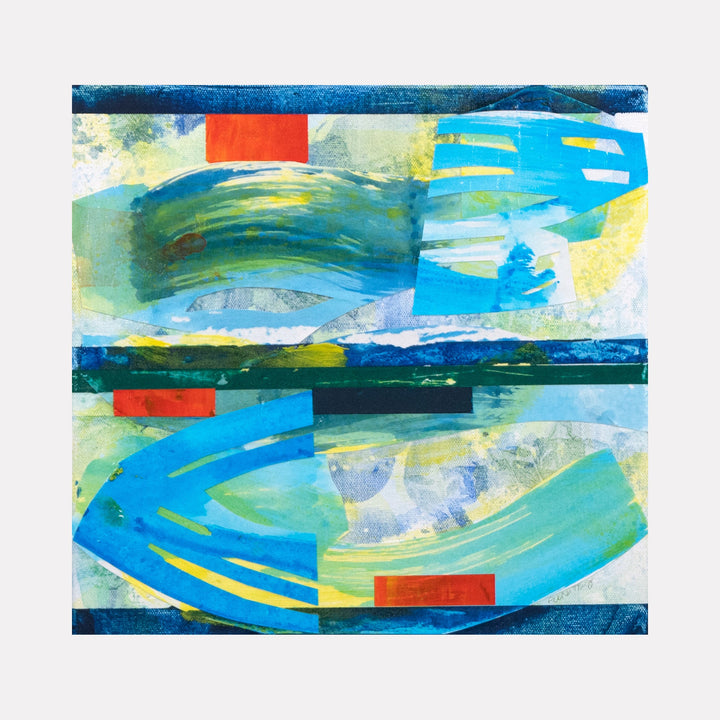
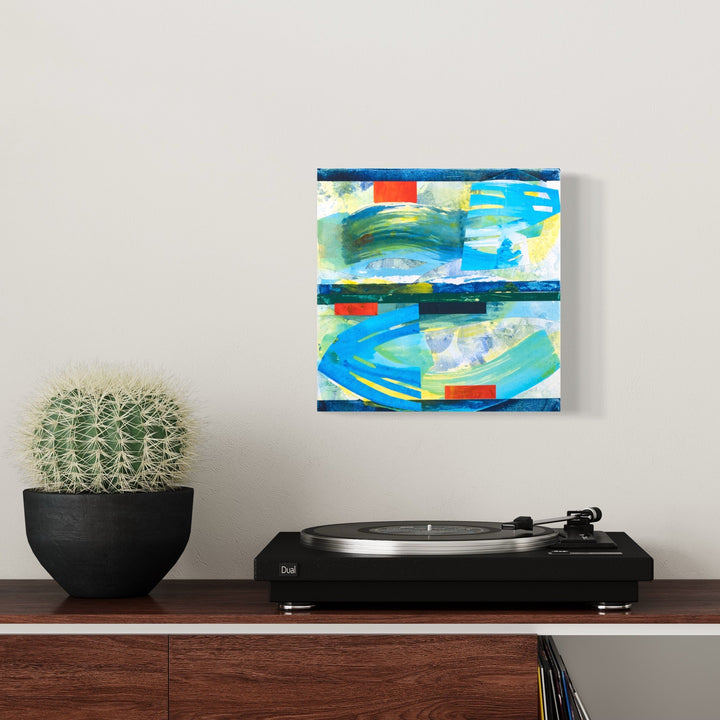
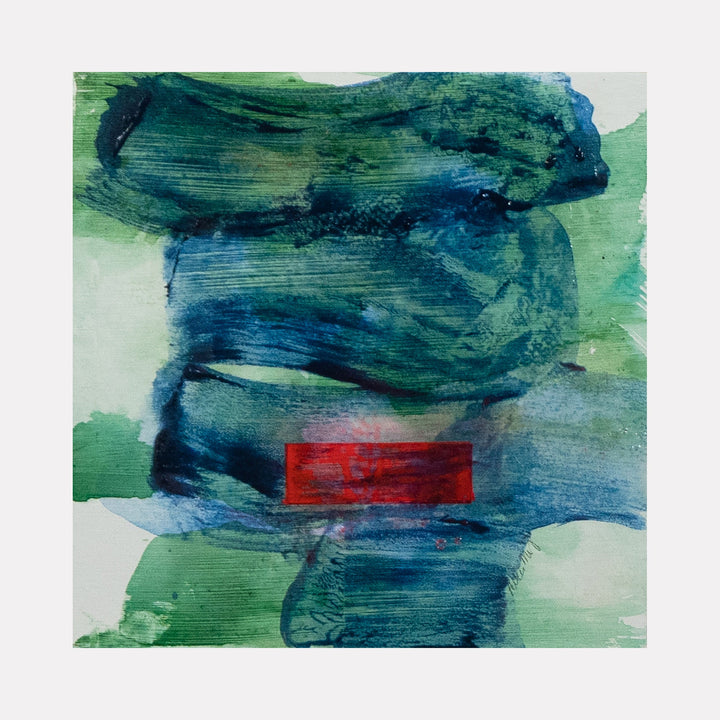
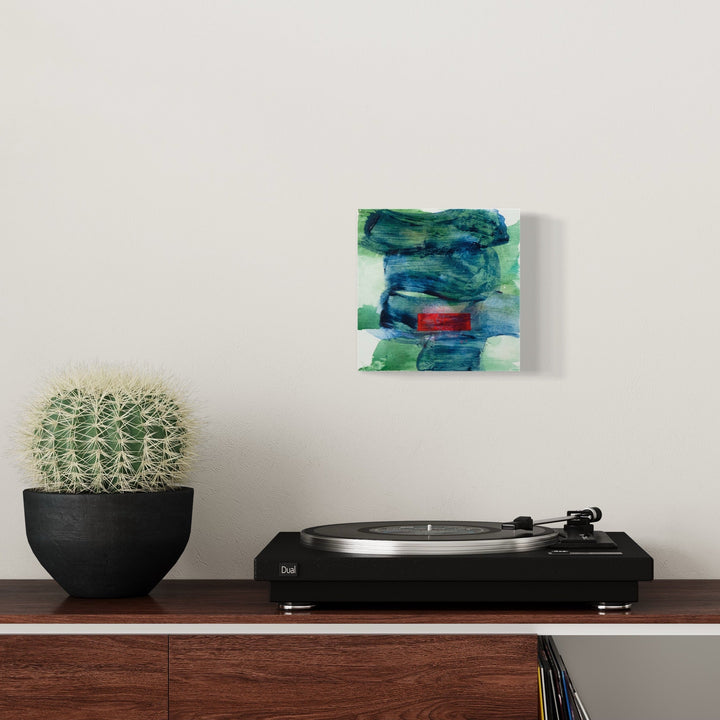
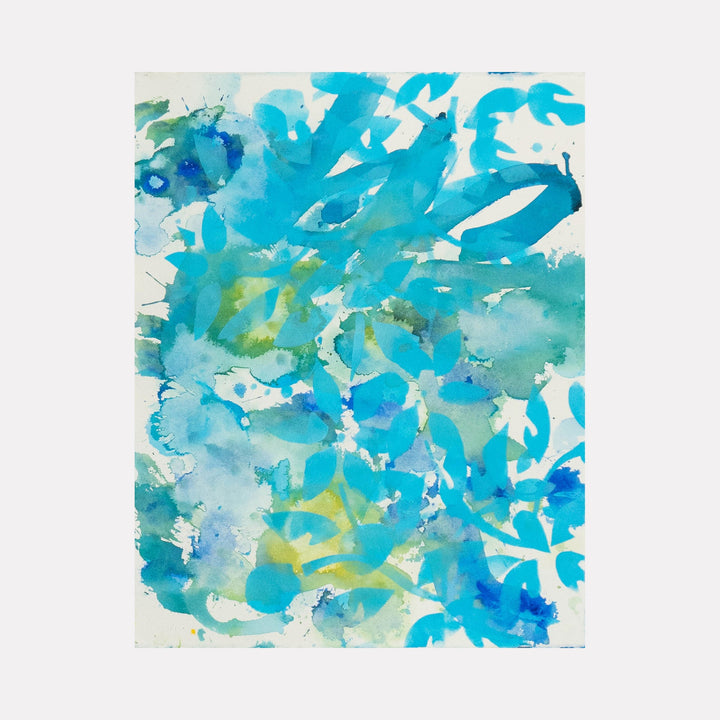
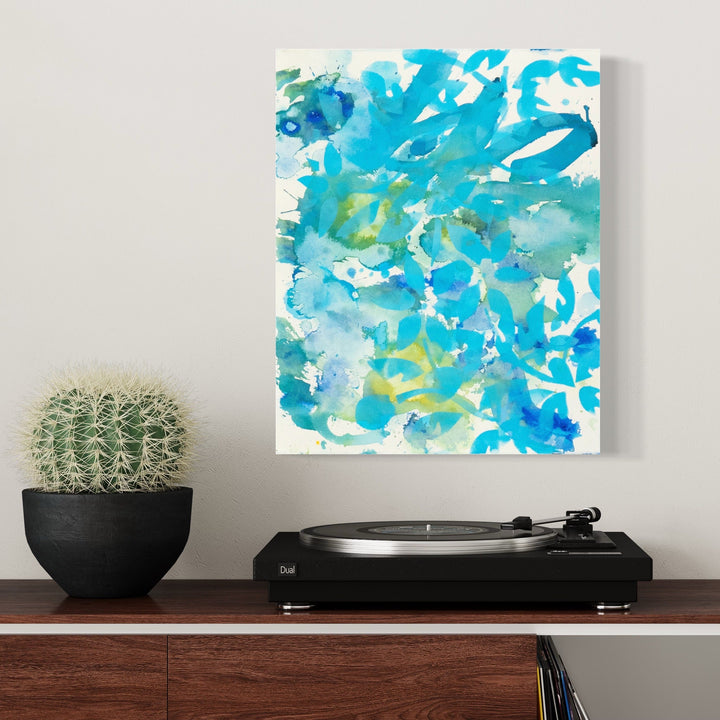
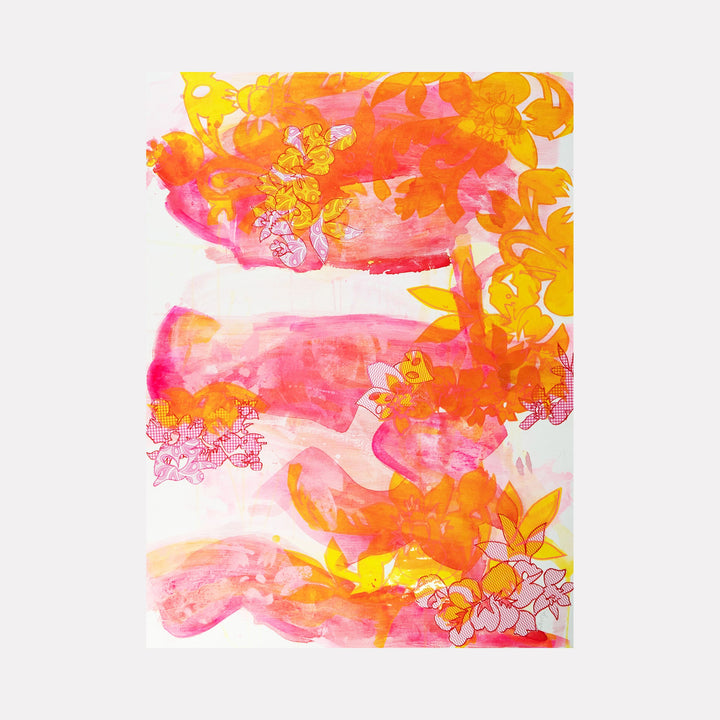
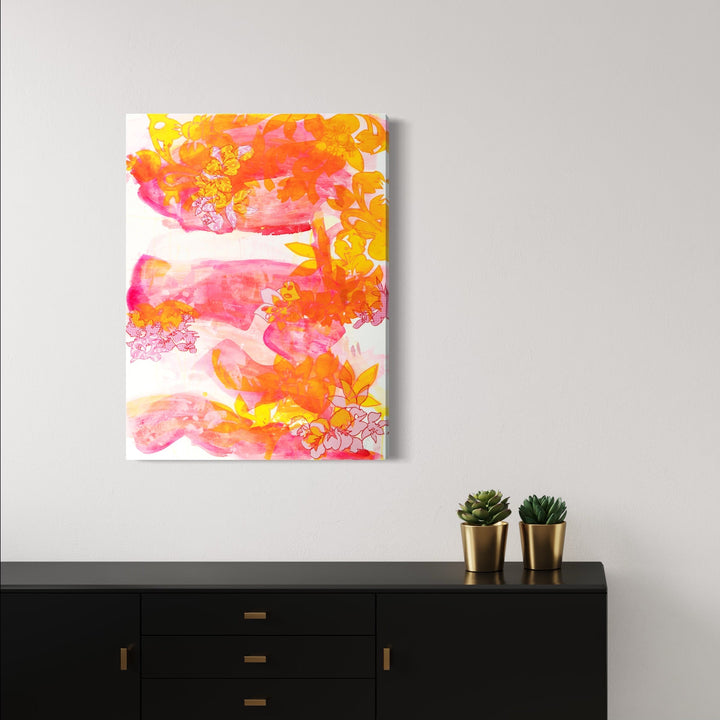
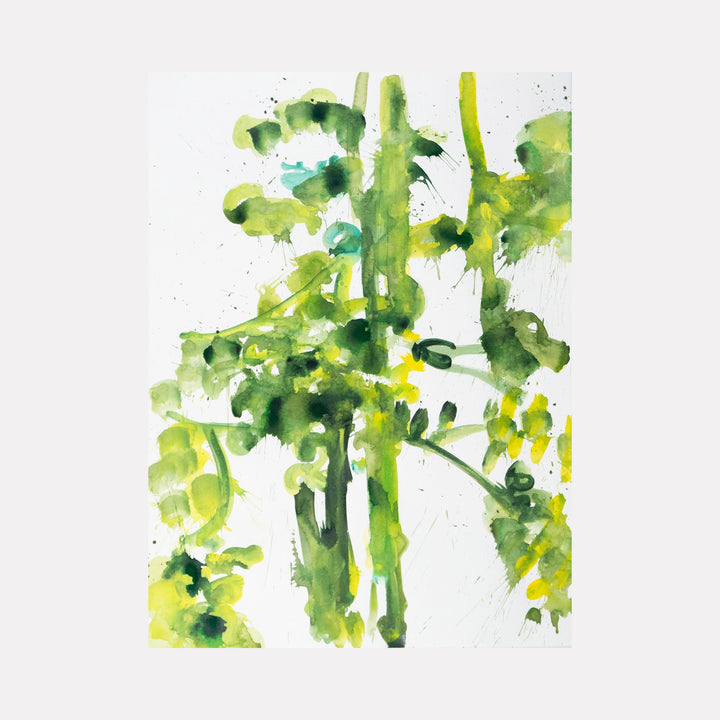
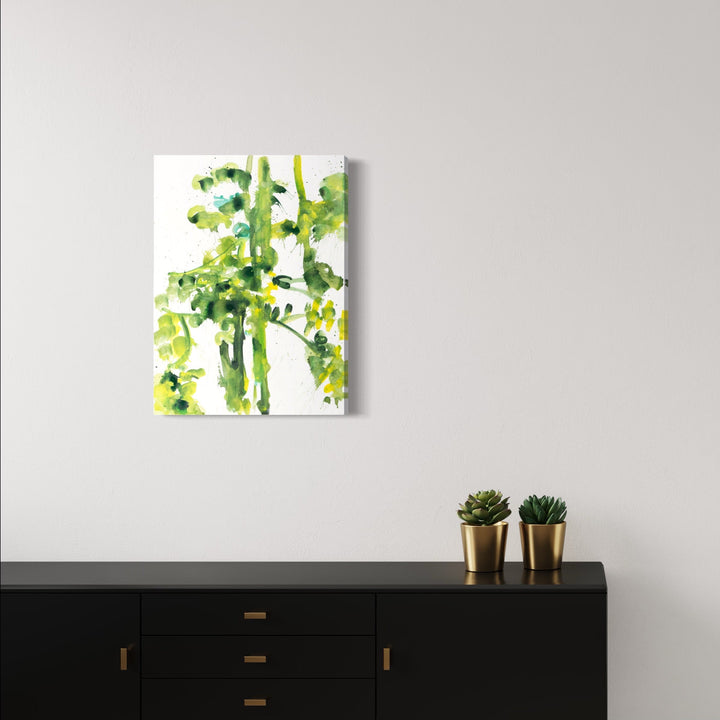
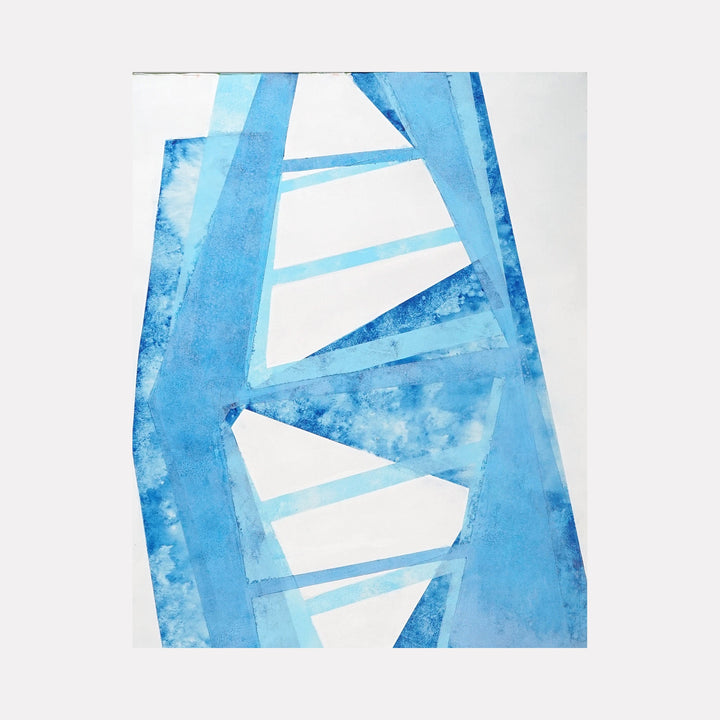
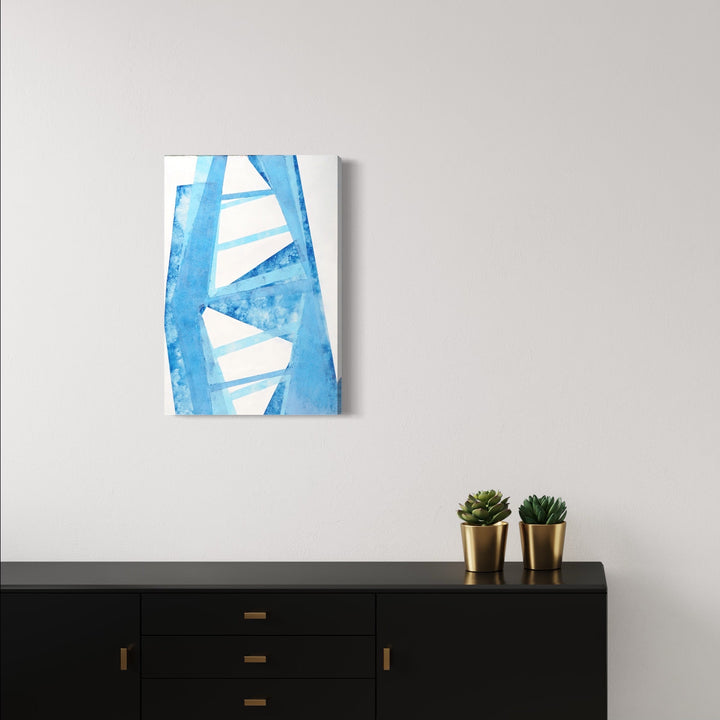
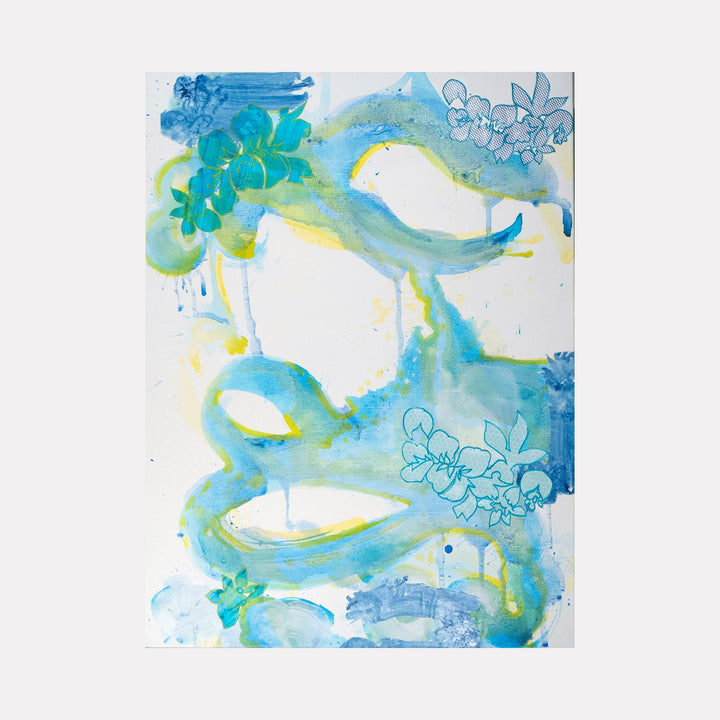
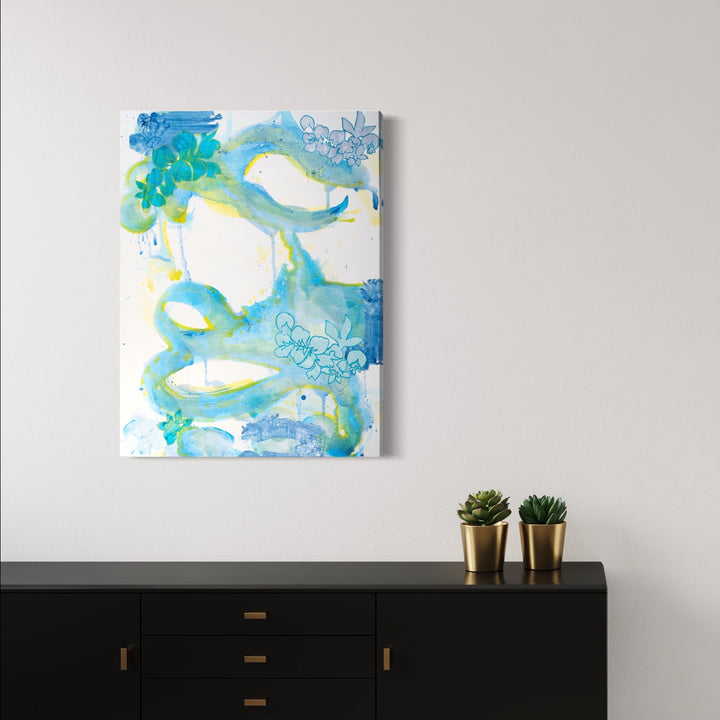
Lisa Petker Mintz has developed a distinct visual language in paint, one that operates as a layered field of navigation. Working in acrylic with poured passages, scraped surfaces, fabric, and stenciled marks, she builds compositions that function like evolving maps. Lines drift, overlap, and re-route across translucent grounds, suggesting pathways, signals, and atmospheric movement.
Her process builds density through accumulation and disruption. She throws everything at the surface—then begins to peel it back. Surfaces are constructed, fractured, and reconfigured, allowing earlier decisions to remain visible as embedded histories. These layers act as visual coordinates, recording shifts in direction rather than fixed destinations. “Scars are lifelines.”
Mintz often pushes her paintings to the point where they feel lost, where orientation collapses and the image disappears. “When a painting dies, I feel like I need to rescue it.” That’s where the battle begins. What emerges is not a return, but a rerouting of something stronger, shaped by everything it has been through.
Color and composition are central to this language. Color creates emotional and spatial pressure; composition directs movement and resistance. Together, they generate a sense of motion through unstable environments, where orientation is provisional and constantly renegotiated.
Rather than resolving into singular images, Mintz’s paintings remain open systems. They reflect a contemporary condition fluid, interrupted, continuously remapped but also something more human: the way life can knock you down, and the willingness to find your way back.
Lisa Petker Mintz has developed a distinct visual language in paint, one that operates as a layered field of navigation. Working in acrylic with poured passages, scraped surfaces, fabric, and stenciled marks, she builds compositions that function like evolving maps. Lines drift, overlap, and re-route across translucent grounds, suggesting pathways, signals, and atmospheric movement.
Her process builds density through accumulation and disruption. She throws everything at the surface—then begins to peel it back. Surfaces are constructed, fractured, and reconfigured, allowing earlier decisions to remain visible as embedded histories. These layers act as visual coordinates, recording shifts in direction rather than fixed destinations. “Scars are lifelines.”
Mintz often pushes her paintings to the point where they feel lost, where orientation collapses and the image disappears. “When a painting dies, I feel like I need to rescue it.” That’s where the battle begins. What emerges is not a return, but a rerouting of something stronger, shaped by everything it has been through.
Color and composition are central to this language. Color creates emotional and spatial pressure; composition directs movement and resistance. Together, they generate a sense of motion through unstable environments, where orientation is provisional and constantly renegotiated.
Rather than resolving into singular images, Mintz’s paintings remain open systems. They reflect a contemporary condition fluid, interrupted, continuously remapped but also something more human: the way life can knock you down, and the willingness to find your way back.
--Lisa Petker Mintz